


OUR SCIENCE
How we interrupt the LAM disease process
Targeting the VEGFR-3 pathway
that drives lymphatic remodeling
The Biology In LAM, elevated VEGF-C and VEGF-D activate the receptor VEGFR-3 on lymphatic endothelial cells, promoting abnormal lymphatic remodeling and permeability in the lung.
The Mechanism OPT-302 is designed to trap VEGF-C and VEGF-D before they activate VEGFR-3, interrupting a key signaling pathway implicated in cystic lung destruction and disease progression in LAM.
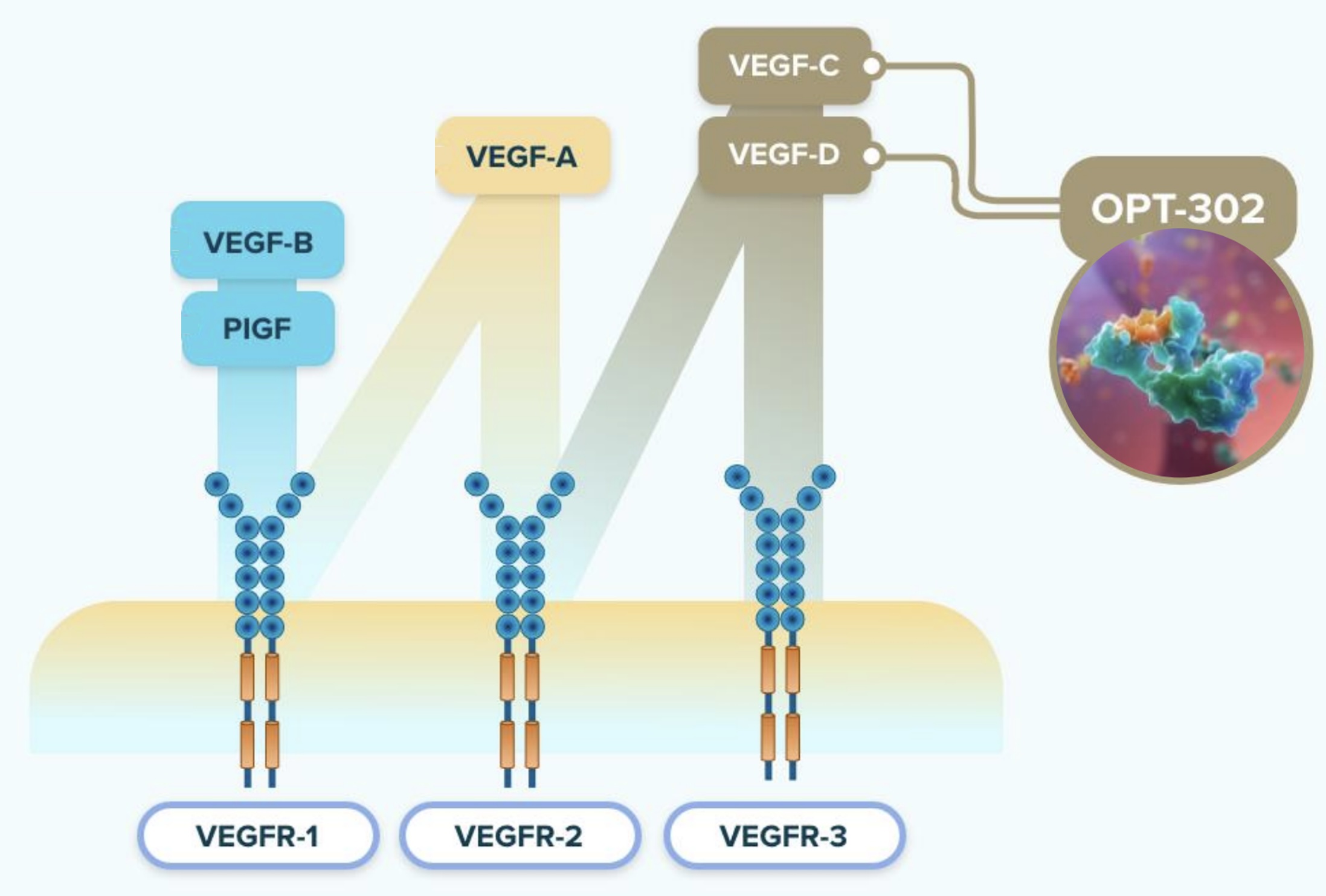
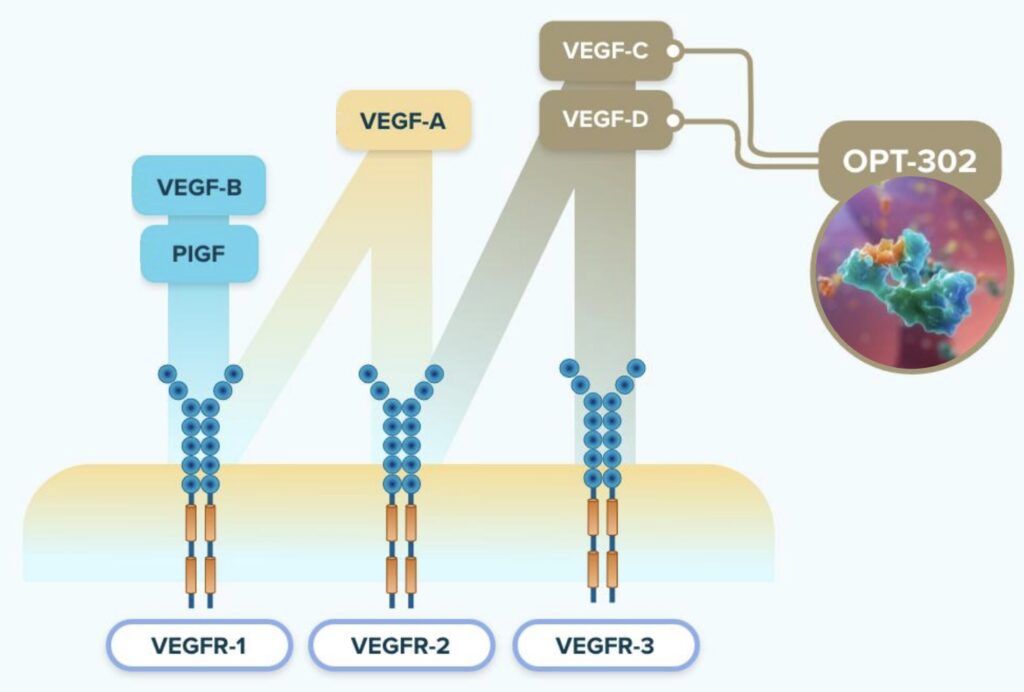

Molecule VEGF-C and VEGF-D are signaling proteins that drive lymphatic vessel growth and permeability through activation of VEGFR-3. OPT-302 is designed to intercept these signaling molecules upstream of receptor activation.
Our lead asset
OPT-302 is a clinically advanced fusion protein with a clear anti-VEGF-C/D mechanism
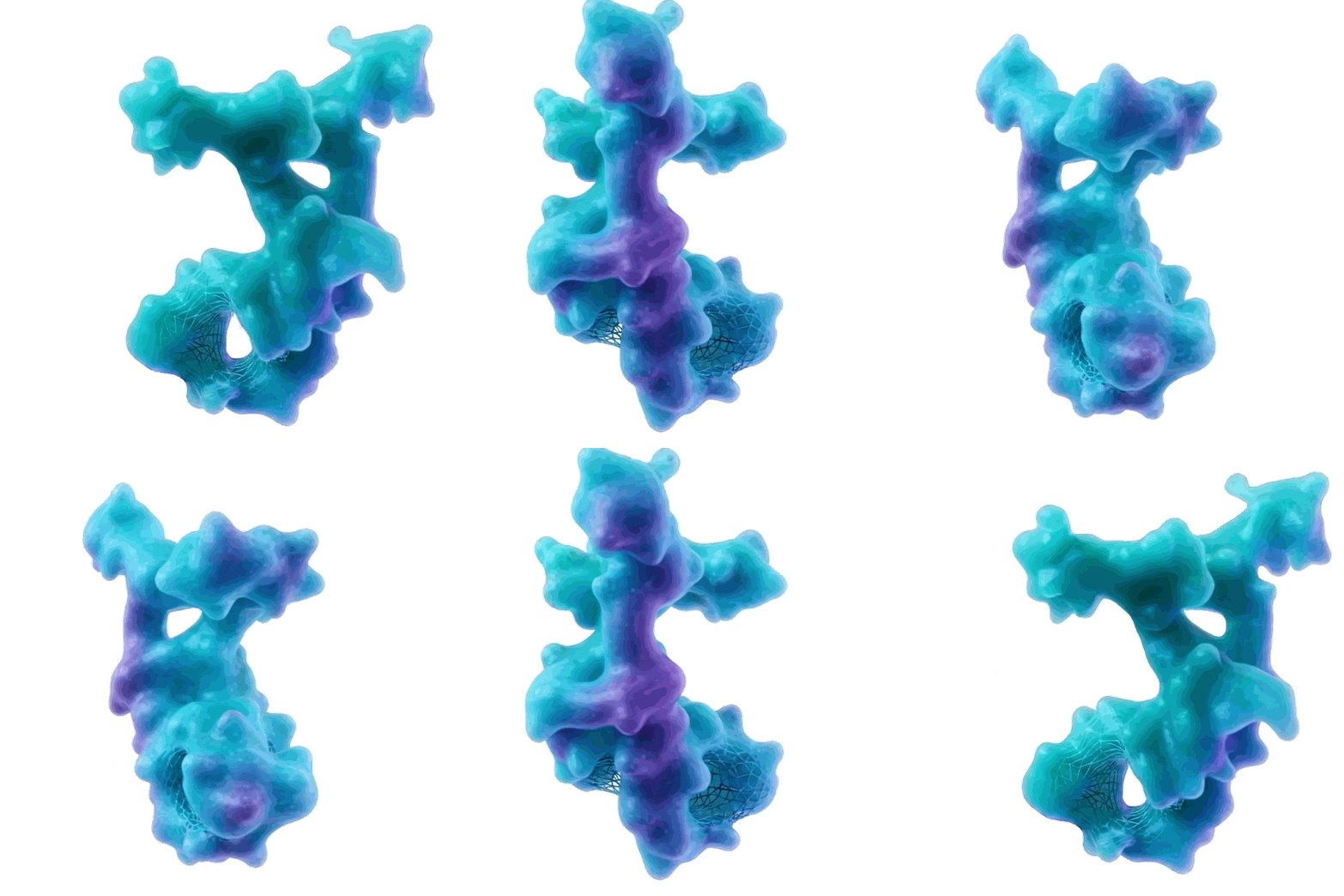


Includes parts of VEGF-3 receptor to trap VEGF-C/D


Already administered to thousands of patients in prior indication


Also includes antibody fragment to increase half-life


Extensive intellectual property portfolio of patents (both issued and applied for)
OPT-302
- A novel, first-in-class VEGF-C/D ‘trap’ fusion protein.
- VEGF-C and VEGF-D are signaling proteins involved in lymphatic vessel growth and disease progression in LAM
- Extensively de-risked via large human safety and activity datasets and with an established manufacturing and regulatory groundwork